

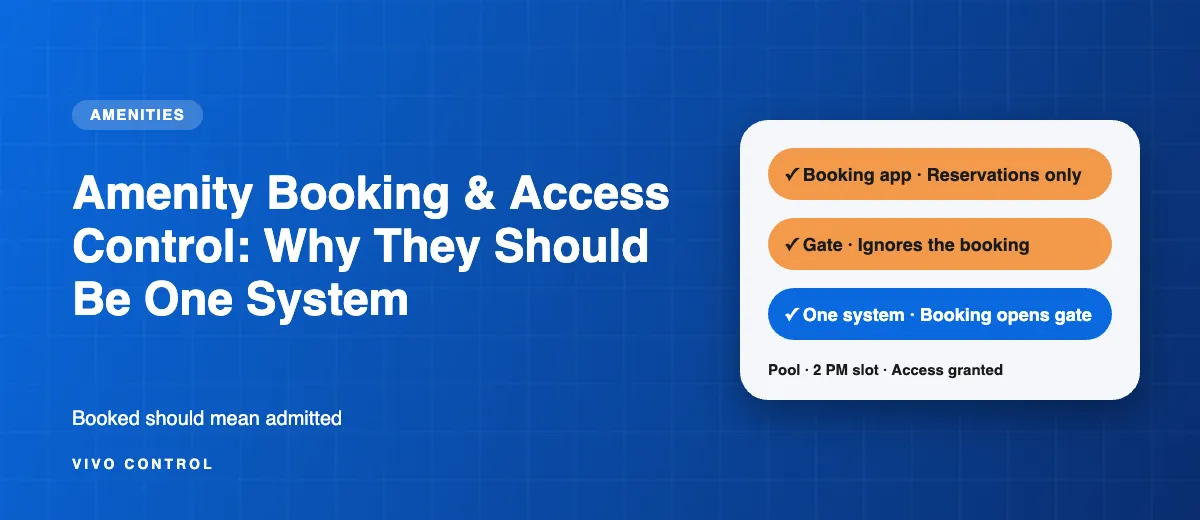
A board installs amenity booking software, residents start reserving pool time and clubhouse slots through an app, and the overcrowding complaints keep coming in anyway. The reason is almost always the same: the booking system and the gate are two separate systems that don’t actually talk to each other. A resident books a 2 PM pool slot, but the pool gate doesn’t know that — it opens for anyone with a key fob, reservation or not.
This post covers why amenity booking only works when it’s tied directly to physical access enforcement, not running alongside it as a separate app.
The gap between booking and enforcement
Most amenity management software does one job well: scheduling. It shows availability, takes reservations, prevents double-booking, and manages waitlists. What it often doesn’t do is control who can physically enter the amenity at any given moment — that’s handled by a separate access control system, usually a fob or keypad that works the same for everyone, all the time, regardless of what the booking calendar says.
The result is a reservation system that functions as a courtesy, not an enforcement mechanism. A resident who didn’t book still gets into the pool with their regular fob. A resident who booked but arrives 20 minutes late finds someone else already in the space, because nothing at the gate actually checked either reservation against who was walking through it.
Why this creates real operational problems
What actual integration looks like
The difference between amenity booking as a courtesy feature and amenity booking as a real operational tool comes down to one thing: whether the credential that opens the gate is the same system that manages the reservation.
How this fits into Vivo Control’s platform
Amenity reservations and access control run on the same Vivo Control platform rather than as separate, bolted-together systems. Residents book the pool, gym, tennis court, or clubhouse from the app; capacity limits, fees, and deposits are enforced automatically; and every amenity entry is logged with timestamp and identity — giving boards a real record rather than two disconnected half-answers when a dispute comes up.
Frequently asked questions
This guide reflects general operational patterns in HOA and condo amenity management. Specific occupancy limits and amenity usage rules should be set according to your property’s governing documents and local safety codes.